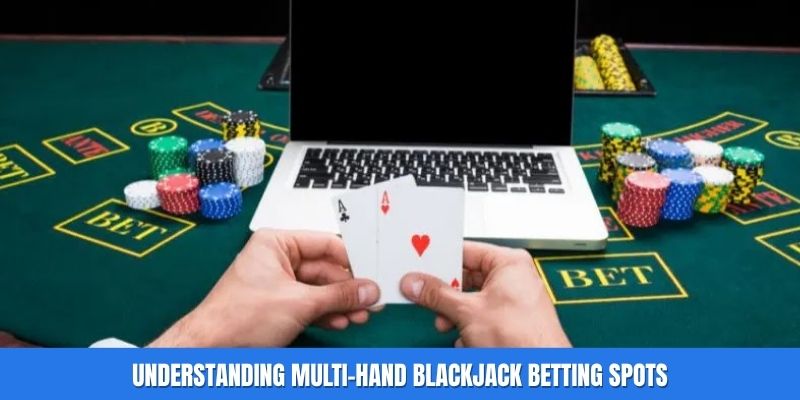
Understanding multi-hand Blackjack transforms a classic game into a high-octane tactical challenge for the modern player. At 7M, we analyze how juggling multiple spots increases both volatility and opportunity, demanding sharper focus and a refined betting edge. If you are ready to outpace the dealer’s house advantage, mastering this dynamic format is your first step toward elite casino performance.
Why Understanding Multi-Hand Blackjack Changes Your Game
The primary difference in multi-hand play is the ability to occupy two, three, or even five “seats” at the virtual or physical table. Instead of placing a single bet, you distribute your stake across several independent hands. Each hand is dealt two cards and played out sequentially against the dealer’s single upcard.
The Interplay Between Exposure and Potential Gain
When you are understanding multi-hand Blackjack, you must realize that you are essentially competing against the dealer’s luck multiple times in one round. If the dealer has a weak upcard (like a 5 or 6), playing multiple hands maximizes your opportunity to capitalize on their high probability of busting. Conversely, if the dealer shows an Ace, you face the risk of losing all your active bets simultaneously.
Faster Gameplay and Volume
For 7MCN players, multi-hand is a tool for efficiency. By playing more hands per hour, you reduce the impact of short-term variance and allow your edge—however small—to manifest more quickly. It turns a marathon into a sprint, demanding sharper focus and faster decision-making.
Strategic Adjustments for Multi-Hand Success
Mastering this format isn’t just about knowing when to hit or stand; it’s about managing the flow of the entire table. One of the most vital aspects of understanding multi-hand Blackjack is recognizing that your decisions on the first hand do not mathematically affect the outcome of the second hand, but they do affect your total session bankroll.
Independent Hands, Shared Dealer
Each hand you play is a silo. You might choose to double down on your first hand (an 11 vs. 6) while playing conservatively on your second hand (a 16 vs. 10). The beauty of this variant is the flexibility it offers. You aren’t “locked in” to a single fate.
The “Table Feel” and Card Counting
In a live environment, playing multiple hands allows you to see more cards from the shoe before the dealer acts. While this doesn’t change the basic strategy for a specific hand, it provides a slight informational advantage for those tracking the “ten-richness” of the deck.
| Feature | Single-Hand Blackjack | Multi-Hand Blackjack |
| Game Pace | Moderate | Fast / Very Fast |
| Bankroll Volatility | Low to Medium | High |
| Skill Requirement | Basic Strategy | Advanced Focus & Management |
| Winning Potential | Consistent | Explosive |
| Dealer Pressure | High (1-on-1) | Diluted across hands |
Bankroll Management When Understanding Multi-Hand Blackjack
The biggest pitfall for newcomers is failing to adjust their betting units. If your standard bet is $50, playing three hands at $50 each triples your “risk of ruin” if the dealer hits a heater. Understanding multi-hand Blackjack means learning to scale.
The 1/2 or 2/3 Rule
A common tactic used by seasoned pros is to reduce the size of individual bets when increasing the number of hands. For example, if you usually bet $100 on one hand, you might bet $60 each on two hands. This keeps your total “at-risk” amount manageable while still giving you two chances to beat the dealer.
Mitigating the Dealer’s Strong Hands
When the dealer shows a 10 or an Ace, the multi-hand player is in a precarious position. This is where “insurance” or “surrender” (if available) becomes a much more complex topic. Losing three hands at once can be a psychological blow; staying disciplined and sticking to the math is the only way to survive these swings.
Leveraging the Winning Streaks
The true thrill comes when the dealer busts. Winning three or five hands in a single round can skyrocket your chip stack. The key is to avoid “chasing” losses by adding more hands when you are down. Instead, use the multi-hand format to capitalize on favorable deck conditions.
Common Mistakes to Avoid in Multi-Hand Play
To truly excel at understanding multi-hand Blackjack, one must be acutely aware of the psychological traps and technical pitfalls that accompany this increased pace. When you move from a single hand to three or five, the house edge doesn’t change, but your exposure to error certainly does. Below are the most frequent blunders that even seasoned players make.
Over-Betting and Poor Bankroll Scaling
The most dangerous error is treating each spot on a multi-hand table with the same financial weight as a single-hand game. If your total bankroll is $1,000, betting $50 on three separate hands simultaneously is a recipe for a quick exit. Understanding multi-hand Blackjack requires a “fractional” betting mindset; you should aim to play more hands than your bankroll can comfortably sustain for at least 50 to 100 rounds of play. If you don’t scale down your individual bets when adding hands, a single “dealer heater” can wipe out your entire session in minutes.
Falling Victim to “Tilt” and Emotional Play
The psychological pressure of losing multiple bets in a single round is a primary hurdle in understanding multi-hand Blackjack effectively. Watching the dealer pull a miracle 21 against your three strong hands (like two 20s and an 11) can lead to “tilt”—a state of emotional frustration where logic is abandoned. When you feel the urge to “chase” losses by adding even more hands or doubling your bets out of spite, it is time to drop back to a single hand or walk away from the table entirely.
Ignoring Basic Strategy for “Safety”
Some players fall into the fallacy of “diversification,” believing that because they have “back-up” hands, they can afford to take unnecessary risks on the first one. For instance, hitting a hard 16 against a dealer’s 6 because “the other two hands look good” is a mathematical disaster. Every hand is an independent event against the dealer’s upcard. To maintain a professional edge, you must play every single spot with 100% mathematical precision, regardless of how your other hands are performing.
Final Thoughts
Understanding multi-hand Blackjack is ultimately about balancing calculated risk with disciplined bankroll scaling. By applying Nhà cái uy tín, you move beyond mere luck and into the realm of mathematical mastery. Whether you are playing for high stakes or refined practice, managing multiple hands simultaneously is the definitive way to maximize your winning potential and dominate the table.