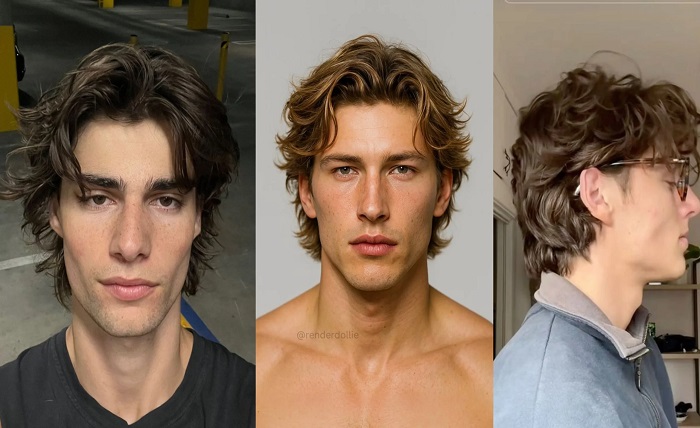
The mens wolf cut is a bold, layered hairstyle that blends the edgy mullet with the textured shag. The mens wolf cut is designed to create volume at the top while keeping the ends messy, wild, and natural-looking. The mens wolf cut has become popular among younger men because it offers a relaxed yet fashionable appearance that stands out without requiring strict styling rules.
Origins and rise of mens wolf cut
The mens wolf cut originally evolved from Korean and Japanese fashion trends, where soft mullet and shag styles were combined into something more modern and expressive. The mens wolf cut gained global popularity through social media platforms like TikTok and Instagram, where influencers showcased its effortlessly cool aesthetic. The mens wolf cut continues to rise in popularity because it suits both casual and fashion-forward personalities.
Who should choose the mens wolf cut?
The mens wolf cut is ideal for men who want a stylish yet low-maintenance haircut that still looks unique. The mens wolf cut works especially well for individuals with thick or medium hair because the layers enhance natural texture. The mens wolf cut also suits creative personalities, students, and professionals who prefer a trendy but relaxed appearance.
Popular styles and variations of mens wolf cut
The mens wolf cut comes in many variations, including short wolf cuts, long layered versions, and even curly adaptations. The mens wolf cut can be combined with fades or undercuts for a sharper and more modern edge. The mens wolf cut is highly customizable, allowing barbers to adjust layers, length, and texture based on personal preference and face shape.
How to style mens wolf cut daily
The mens wolf cut is easy to style, making it perfect for busy lifestyles. The mens wolf cut can be styled using lightweight wax, sea salt spray, or texturizing mousse to enhance its messy and voluminous look. The mens wolf cut looks best when you avoid over-combing, as its natural flow is what gives it character and charm.
Maintenance and hair care for mens wolf cut
The mens wolf cut requires regular trims every 6–8 weeks to maintain its shape and layering. The mens wolf cut should be washed with mild shampoo and conditioned properly to keep the hair soft and healthy. The mens wolf cut also benefits from occasional deep conditioning treatments, especially if heat styling tools are used frequently.
Best face shapes and hair types for mens wolf cut
The mens wolf cut suits a variety of face shapes, including oval, round, and heart-shaped faces. The mens wolf cut is particularly flattering for people with wavy or slightly curly hair because it enhances natural movement. The mens wolf cut can also be adjusted for straight hair, giving it added volume and texture through layering techniques.
Conclusion
The mens wolf cut is more than just a hairstyle—it’s a modern expression of individuality and style. The mens wolf cut offers versatility, allowing men to adapt it to their personality, hair type, and lifestyle. The mens wolf cut continues to dominate fashion trends because it combines effortless styling with a bold, edgy appearance that stands out in any crowd.
FAQs
1. What makes the mens wolf cut different from other hairstyles?
The mens wolf cut is different because it blends shag and mullet styles into a layered, textured look that feels both messy and stylish at the same time.
2. Is the mens wolf cut easy to maintain?
Yes, the mens wolf cut is relatively easy to maintain, requiring only regular trims and basic styling products to keep its shape and volume.
3. Can the mens wolf cut work on straight hair?
The mens wolf cut works on straight hair, but it may need added texture products to achieve the signature messy and voluminous effect.
4. Is the mens wolf cut suitable for professional settings?
The mens wolf cut can be adapted for professional environments by keeping it more structured and less messy while still maintaining its layered style.
5. How often should I trim my mens wolf cut?
The mens wolf cut should be trimmed every 6–8 weeks to maintain its layered shape and prevent it from becoming too overgrown.