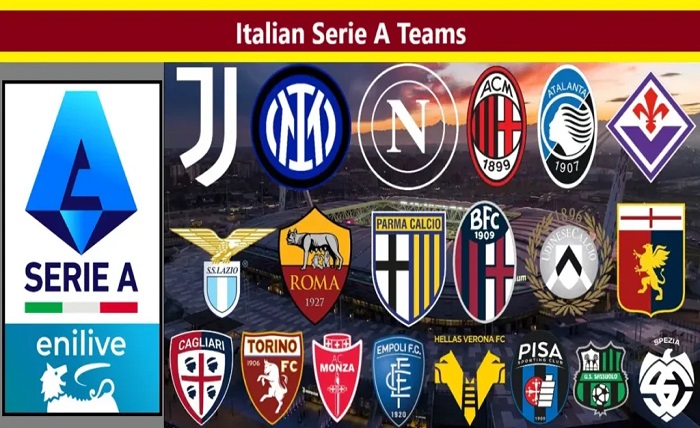
In the 2024/25 Serie A season, the clubs that dominated headlines and commercial rankings were not automatically those that produced the best long‑term betting returns, because markets priced fame and recent success into odds faster than they priced quiet, consistent over‑performance. For bettors, the real task was to distinguish “big teams” that attracted sentiment-driven money from structurally undervalued sides whose results outpaced the implied probabilities in their prices.
What “big teams” and “money‑making teams” mean for a bettor
From a betting perspective, a big team is defined less by league finish and more by brand—global fanbase, media exposure, and financial scale—which surveys of club revenues and valuations in 2024/25 show most strongly for Inter and Juventus, followed by Napoli and Milan. Those clubs drew the majority of public stakes in marquee fixtures, even when performance metrics temporarily dipped, because supporters and casual bettors defaulted to their status rather than their current level.
By contrast, a money‑making team is any side whose actual match outcomes, over a season, delivered positive betting returns against closing odds—usually because they were consistently underrated or misclassified by the market. Empirical work on outcome bias in European football demonstrates that markets tend to overestimate teams that have recently over‑performed their expected‑goals numbers and underestimate those that have under‑performed, leading to systematically negative returns on “hot” favourites and positive returns on quietly improving sides.
How the 2024/25 table hides betting realities
The 2024/25 Serie A table lists Napoli as champions on 82 points, with Inter second on 81, Atalanta third on 74, Juventus fourth on 70, and Roma, Fiorentina, Lazio, and Milan completing a top eight packed with historic names. At first glance, this structure suggests that backing a rotating cast of big clubs would have captured most wins, since those sides occupied the Champions League and Europa League spots and dominated goal difference.
But for bettors, the question is not which teams collected the most points, but which sides did so relative to the odds they were given each weekend. A favourite priced at an implied 70% win probability that wins 70% of the time is break‑even; a mid‑table team priced at 30% but winning 40% in comparable spots is the one generating surplus value. Research on betting markets across Europe confirms that popular teams are often offered on less favourable terms, reflecting sentiment rather than neutral probability, and that profitable strategies often revolve around clubs whose league positions do not fully match their market profile.
Which clubs represented “big teams” in 2024/25 terms?
Several indicators underline which clubs functioned as “big” from a betting and finance standpoint. Inter and Juventus both reported revenues exceeding €500m in 2024/25, placing them at the top of the Serie A commercial hierarchy, while Napoli and Milan joined them in the European elite in terms of stadium attendances, broadcast exposure, and international branding. The league table reinforces this, with all four in the top eight and Inter and Napoli contesting the title until the final week.
These teams also dominated media narratives: coverage of “big matches” and derbies across the 2024/25 calendar centred on Inter–Milan, Juventus–Napoli, Roma–Inter, and similar pairings, which in turn concentrated casual betting interest on their matches. That exposure fed back into odds‑setting: studies on sentiment bias show that bookmakers shade lines towards favourites with large social media followings and strong brand recognition, knowing that a disproportionate share of public stakes will land on them regardless of price.
Which types of teams are more likely to be genuine money‑makers?
In contrast, the clubs most likely to create repeatable positive returns tend to share different characteristics. Teams like Atalanta, Bologna, and Fiorentina in 2024/25 combined strong or improving performance with comparatively modest global profiles and, in Atalanta’s case, a decade‑long record of financial discipline and sustainable sporting success that did not always translate into “big club” public perception. Atalanta’s €58.6m pre‑tax profit in 2024/25—the highest in Serie A—reflects careful squad building and consistent over‑delivery relative to resources, which often leads to them being underrated when facing traditional giants.
Outcome-bias research shows that markets underprice teams that underperform their xG and overprice those that overperform it, especially in the short term. That means a club like Bologna or Fiorentina that plays well, generates chances, and posts strong expected‑goals numbers but sits only mid‑table early in the season may offer better value in match odds than a storied giant whose points tally temporarily exceeds what its underlying performance justifies.
Comparison: “big team” vs “money‑making team” traits
A simple comparison illustrates how the two categories diverge in what matters to bettors.
| Dimension | “Big team” traits (Inter, Juventus, Napoli, Milan) | “Money‑making team” traits (Atalanta, Bologna, Fiorentina, Genoa types) |
| Brand and fanbase | Huge domestic and global support; strong social media presence. | Smaller following; less media coverage; local or niche fanbases. |
| Market sentiment | Heavy favourite of public money, especially in big matches. | Less emotional backing; prices move more on data than on loyalty. |
| Odds shading | Priced shorter due to sentiment; lower expected edge per bet. | Often receive slightly longer odds than underlying performance merits. |
| Profitability tendency | Attractive to bet, but often low long‑term ROI. | Less glamorous but more likely to generate positive returns when selected carefully. |
For a bettor, these differences imply that “rooting interest” and “investment interest” often diverge; the clubs that feel safest to back are not necessarily those that make money across a 38‑match season.
How UFABET fits into separating reputation from value
Because the distinction between big names and money‑makers plays out across dozens of fixtures, the structure of a betting environment can either reveal or obscure the patterns. When evaluating ufabet168 through a bettor’s lens, the key is how clearly it presents odds, movements, and market depth for both headline clubs and quieter mid‑table sides in the same Serie A round: if the interface lets you quickly compare implied probabilities, see how lines shift when public money arrives for Inter or Juventus, and place equal emphasis on Atalanta–Bologna as on Juventus–Milan, it becomes easier to spot where reputational weight has compressed prices on giants while leaving more neutral, data‑driven odds on high‑performing but less glamorous teams that are better candidates for long‑term profit.
Using a list‑based framework to classify teams for betting purposes
To move from intuition to structure, bettors can build a simple classification routine that tags Serie A teams as predominantly “brand‑driven” or “value‑driven” in any given season. The point is not to pigeonhole clubs forever, but to track when odds appear to be driven more by logo and recent scorelines than by genuine performance.
A working sequence might involve:
- Start from the league table and expected‑goals data: identify teams whose points significantly exceed or trail their xG‑based expected points.
- Cross‑check those teams against revenue and brand indicators—Inter, Juventus, Napoli, Milan sit clearly at the top—and note where sentiment is most likely to influence prices.
- Examine home and away form against the spread or closing odds if available, looking for sides that repeatedly beat expectations (value signs) or repeatedly fail to cover as short favourites (overpriced signs).
- Track media coverage around hot streaks: clubs heavily praised for “incredible runs” after a series of close wins are prime candidates for overpricing, particularly if their xG and shot data look more ordinary.
- Re‑evaluate labels every 6–8 matchdays, since managerial changes, injuries, or tactical shifts can quickly turn a money‑making team into a fairly priced one and vice versa.
Interpreting the season through this lens moves you from simply “betting on the best teams” to systematically asking which teams the market is currently over‑ or under‑rewarding relative to how they actually play and how much they are loved by the crowd.
Where the concept breaks down and why it still matters
The distinction between big teams and money‑making teams is not absolute. At certain moments in 2024/25, clubs like Napoli or Inter could be both: playing dominant football, priced aggressively but still leaving a sliver of value because the market underestimated just how strong they had become under stable coaching and coherent tactics. Outcome‑bias research even shows that, in some periods, markets correct underpricing of previously underperforming teams, closing the window where they offered easy profit.
Yet across multiple leagues and seasons, the same studies find that sentiment around famous clubs never fully disappears: favourites with long strings of “spread covers” remain slightly overpriced, while more anonymous sides with equally good or better underlying performance continue to offer better terms. For a bettor focused on Serie A 2024/25, keeping this structural bias in mind is what turns the league table from a list of champions into a map of where reputation and reality quietly diverge.
How casino online ecosystems blur the line between rational and sentimental betting
Within modern gambling environments, the difference between backing a big name for rational reasons and backing it out of habit becomes harder to see because sports and non‑sports products share the same digital space. After a weekend in which Inter or Juventus “should have won” but didn’t, bettors steeped in their fan identity may chase losses via quick turns in casino online offerings, treating their emotional attachment to a club as justification for further risk rather than reassessing whether they misread the odds in the first place.
This behaviour matters for the concept of money‑making teams because it shifts the axis of decision‑making away from value and towards allegiance. Recognising how attachment to famous clubs spills into broader gambling choices helps serious bettors keep their profiling work—about which Serie A sides are actually mispriced—separate from the emotional pull of seeing those same badges across every part of a digital gambling ecosystem.
Summary
In 2024/25 Serie A, Inter, Juventus, Napoli, and Milan functioned as “big teams” in branding, revenue, and public betting sentiment, but that status did not guarantee that they were the most profitable clubs to back once odds were considered. Studies on outcome and sentiment bias show that markets often overprice teams that overperform and those with large fanbases, while quieter, well‑run sides like Atalanta, Fiorentina, or Bologna can become genuine money‑makers when their underlying performances exceed what their reputations suggest, providing edge for bettors who consistently separate fame from value rather than letting club status or broader gambling environments dictate their decisions.